Long before the first massage therapist opened a practice, the people of the Bible were anointing bodies with sacred oils — pouring them over heads, rubbing them into skin, applying them to wounds, and using them as instruments of prayer, healing, and spiritual connection. The tradition of applying oil to the body is woven through Scripture from Genesis to Revelation, and it carries a depth of meaning that modern wellness culture is only beginning to rediscover.
Today, millions of people use massage oil as part of their health and self-care routines. But few realize that this practice has ancient biblical roots — that the act of applying oil to the body is not merely physical, but profoundly spiritual. And when the oils you use are the same sacred resins described in God's Word — frankincense, myrrh, olive oil, spikenard — the practice connects you to a 5,000-year-old tradition of faith-based wellness.
This guide explores the spiritual and scriptural tradition of anointing the body with oil, what the Bible says about it, and how you can incorporate genuinely biblical oils into your own wellness and massage practice today.
The Biblical Foundation: Oil and the Body in Scripture
The concept of applying oil to the body appears throughout Scripture in multiple distinct contexts — each one illuminating a different dimension of this ancient practice.
Anointing as Consecration (Exodus 30:22–25)
The most explicit biblical instruction regarding oil and the body comes in Exodus 30, where God gave Moses a precise formula for the sacred anointing oil used to consecrate Aaron and his sons as priests:
"Take the finest spices: of liquid myrrh 500 shekels, and of sweet-smelling cinnamon half as much, that is, 250, and 250 of aromatic cane, and 500 of cassia, according to the shekel of the sanctuary, and a hin of olive oil." (Exodus 30:23–24, ESV)
The oil was applied physically to the body — poured on the head, running down over the beard and garments (Psalm 133:2) — as a tangible act of setting a person apart for God's purposes. The physical application of oil to the body was inseparable from the spiritual act of consecration.
Anointing as Healing (James 5:14)
The New Testament gives one of the most direct instructions in all of Scripture connecting oil, the body, and healing:
"Is anyone among you sick? Let them call the elders of the church to pray over them and anoint them with oil in the name of the Lord." (James 5:14, NKJV)
The Greek word used here — aleiphō — refers to rubbing or applying oil to the body. This is a physical, hands-on act: oil applied to skin, accompanied by prayer and faith. The body is the vessel. The oil is the instrument. The prayer is the power.
Anointing as Honor and Devotion (Luke 7:38, John 12:3)
In one of the most moving scenes in all of the Gospels, a woman breaks open an alabaster jar of spikenard — one of the most expensive perfumed oils in the ancient world — and anoints Jesus' feet with it, wiping them with her hair:
"She began to wet His feet with her tears, and kept wiping them with the hair of her head, and kissing His feet and anointing them with the perfume." (Luke 7:38, NASB)
In John 12:3, Mary of Bethany does the same with pure spikenard — "and the house was filled with the fragrance of the perfume." These acts of anointing the body were expressions of the deepest possible love and honor — a physical, sensory, and spiritual offering.
The Good Samaritan: Oil as Compassionate Care (Luke 10:34)
"He went to him and bound up his wounds, pouring on oil and wine." (Luke 10:34, ESV)
In this parable, the application of oil to the body is an act of pure compassion — practical, urgent, and healing. The Samaritan's use of oil wasn't ceremonial. It was care made visible through touch and anointing.
What Biblical Massage Oil Actually Contains
Modern massage oils vary enormously in quality and composition — from synthetic fragrance blends that mimic the scent of natural resins without any of their properties, to genuinely pure formulations using the same botanicals described in Scripture.
The most important distinction is this: genuine biblical oils are made from real resins infused into real olive oil — not synthetic fragrance versions of those resins.
The oils described in Scripture — frankincense, myrrh, spikenard, cinnamon, cedarwood — are all botanical resins and plant extracts that contain naturally occurring active compounds. Modern research has increasingly examined these compounds for their properties related to inflammation, cellular function, and skin health.
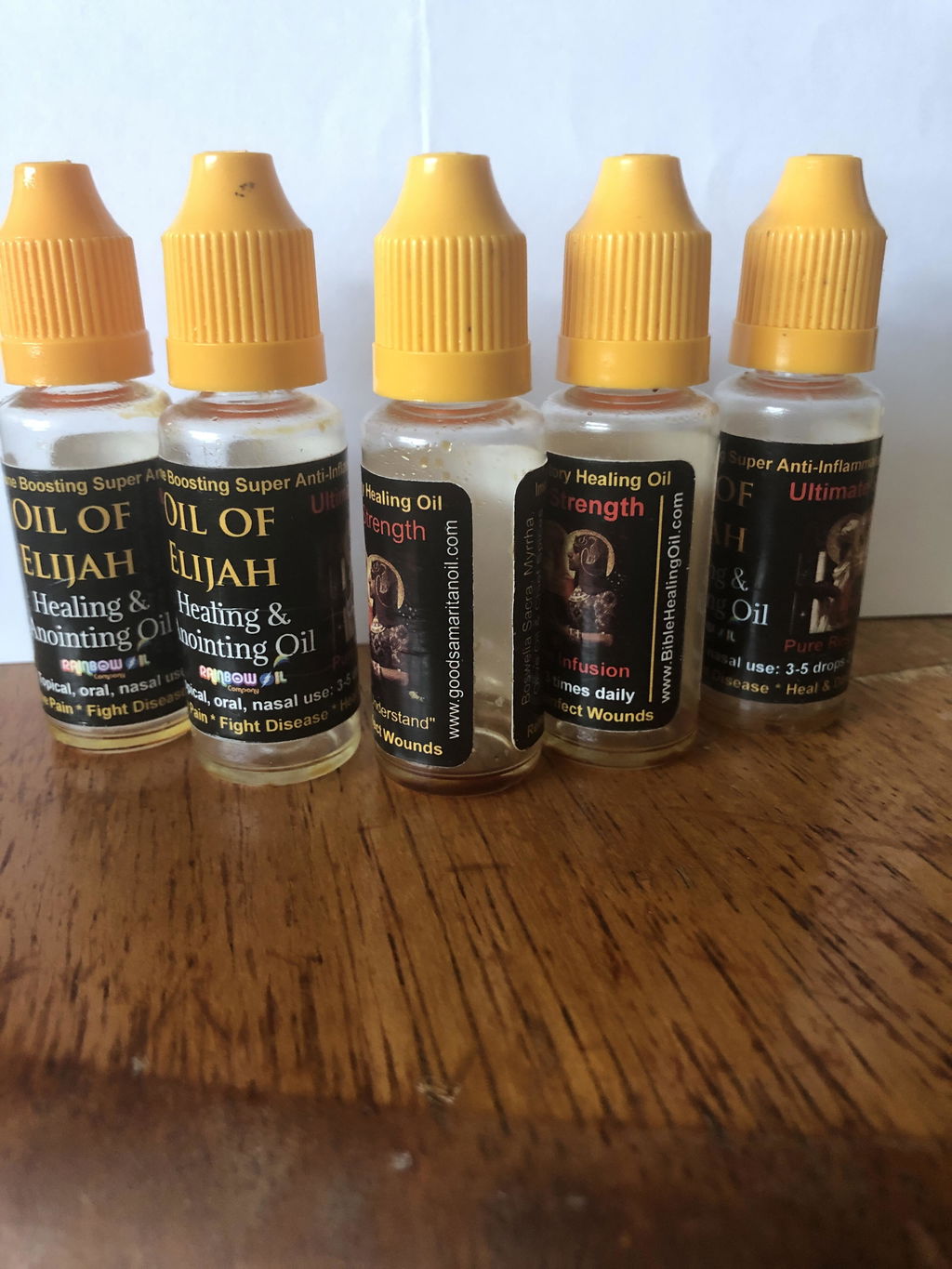
At Bible Healing Oil, our Kure-It formulations are made from real frankincense and myrrh resins smoke-infused into premium extra virgin olive oil — the same base described throughout Scripture. Our Rx4 formulation also includes basil, rosemary, cinnamon, tea tree, oregano, spikenard, ylang ylang, lavender, citrus, and cedarwood — a full botanical profile rooted in biblical herbal tradition.
These statements have not been evaluated by the Food and Drug Administration. These products are not intended to diagnose, treat, cure, or prevent any disease.
How to Incorporate Biblical Oil into Your Body Anointing Practice
Whether your purpose is spiritual, physical, or both — here is how believers and wellness-seekers incorporate biblical anointing oils into a body anointing or massage practice:
As a Daily Spiritual Anointing
Many Christians anoint themselves daily as a spiritual discipline — a few drops of oil applied to the forehead, hands, or chest while speaking a scripture or prayer over their body. This mirrors the priestly anointing of the Old Testament and the personal faith practice described in James 5.
Start with 2–3 drops of Kure-It Rx1 Original — at 12.5% strength, it's formulated for daily personal use, absorbs quickly into the skin, and carries the authentic scent of frankincense and myrrh that has characterized Christian and Jewish anointing practice for millennia.
Shop Kure-It Rx1 Original — Daily Anointing & Personal Wellness
As a Massage and Body Oil
The olive oil base of Kure-It products makes them genuinely suitable as a body massage oil — absorbing into skin without leaving a greasy residue, carrying the botanical compounds of the infused resins through the skin, and filling the room with the distinctive fragrance of biblical frankincense and myrrh.
Apply 4–5 drops to areas of muscle tension, joints, or skin during a personal or partner massage. The Rx4 Super Strength formulation — containing the full botanical blend of 13 ingredients including spikenard, lavender, and cedarwood — is particularly suited to body massage applications where deeper penetration and broader aromatic coverage are desired.
Shop Kure-It Rx4 Super Strength — Full Biblical Botanical Blend
As a Prayer and Ministry Oil
For pastors, elders, prayer ministers, and those who anoint others as part of their ministry — the act of applying oil to another person's body during prayer is one of the most tangible expressions of faith described in the New Testament (James 5:14). Having a genuine biblical anointing oil — not a synthetic substitute — honors the gravity of that act.
Our Oil of Elijah Ultimate Strength formulation, made from Sacred Green Omani Hojari Frankincense, Pure Grade A Myrrh, and Sandalwood, is our most concentrated formulation and is used by ministers, prayer warriors, and believers seeking the deepest biblical resin experience available.
The Body as the Temple: A Biblical Perspective on Physical Care
"Or do you not know that your body is a temple of the Holy Spirit within you, whom you have from God? You are not your own, for you were bought with a price. So glorify God in your body." (1 Corinthians 6:19–20, ESV)
This passage reframes physical care — including anointing, massage, and the intentional application of oil to the body — as an act of worship and stewardship. Caring for your body with the same oils that priests, prophets, and the early church used is not a trivial or merely cosmetic act. It is an expression of honoring the temple God entrusted to you.
Biblical self-care is not self-indulgence. It is the responsible stewardship of a physical vessel created and inhabited by the Spirit of God.
Bible healing Oil
Phone: 321-537-9430
Address: Rockledge, Florida 32955
Email: info@biblehealingoil.com
Frequently Asked Questions (FAQs)
Q1: What does the Bible say about anointing the body with oil?
The Bible references anointing the body with oil in multiple contexts: priestly consecration (Exodus 30:22–25), healing prayer (James 5:14), honor and devotion (Luke 7:38, John 12:3), and compassionate wound care (Luke 10:34). In every case, the physical application of oil to the body is connected to a spiritual purpose — consecration, faith, healing, or love. The tradition runs from Moses through the early church and remains a living practice for believers today.
Q2: Can I use biblical anointing oil as a massage oil?
Yes — biblical anointing oils made from frankincense and myrrh resins infused into olive oil (like Kure-It products) are genuinely suitable for topical body use, including massage. The olive oil base absorbs into skin effectively, the botanical resins carry through the skin, and the aromatic properties of frankincense and myrrh create a spiritually meaningful sensory experience. Use 4–5 drops per area and apply with gentle massage strokes.
Q3: What is the difference between anointing oil and massage oil in the Bible?
In biblical context, the distinction is one of purpose rather than composition. Anointing oil was applied to set something or someone apart for God's purposes — consecration, healing, or honor. Massage in the ancient world (as in Luke 10:34) used oil as a healing and soothing agent applied directly to wounds and skin. Both involved the physical application of oil to the body. Kure-It products honor both purposes — suitable for spiritual anointing and topical body application.
Q4: What oils did Jesus use or was anointed with in the Bible?
Jesus was anointed with spikenard by Mary of Bethany (John 12:3) and by the woman at Simon's house (Luke 7:38). At his birth, the Wise Men brought frankincense and myrrh (Matthew 2:11). At his burial, Nicodemus brought myrrh and aloes (John 19:39). These are four of the most significant biblical oils, all of which are represented in Kure-It formulations.
Q5: Is it biblical to anoint your own body with oil?
Yes. While James 5:14 describes elders anointing the sick, the broader biblical tradition includes personal anointing — David anointed himself with oil (2 Samuel 12:20), the woman anointed Jesus in a personal act of worship (Luke 7:38), and the general Old Testament practice included personal anointing as part of grooming, worship, and spiritual preparation. Daily personal anointing with a biblical oil is a legitimate and meaningful spiritual discipline.
Q6: What makes Kure-It different from regular massage oil or essential oil blends?
Kure-It is made from real frankincense and myrrh resins smoke-infused into premium extra virgin olive oil — not synthetic fragrance versions of these botanicals, and not distilled essential oils. The incense infusion process preserves the full resin compound profile that simple distillation removes. The result is a genuinely biblical formulation that reflects how ancient priests, healers, and early Christians actually prepared and used these sacred oils.
Conclusion
The spiritual tradition of anointing the body with oil is not an ancient relic. It is a living practice — rooted in Scripture, demonstrated by Jesus himself, commanded in the New Testament, and available to every believer today through the same sacred botanicals God embedded in creation thousands of years ago.
Whether you're incorporating biblical oil into daily personal anointing, a massage practice, or prayer ministry — the oils you choose matter. Choose oils made from real resins, infused into real olive oil, in the tradition of the Scripture you trust.
At Bible Healing Oil, every bottle of Kure-It is made with exactly that in mind — frankincense and myrrh resins, premium olive oil, and a lineage of faith that stretches back to Moses, David, and the early church.
"Heal me, O Lord, and I shall be healed; save me, and I shall be saved, for You are my praise." (Jeremiah 17:14, ESV)
These statements have not been evaluated by the Food and Drug Administration. These products are not intended to diagnose, treat, cure, or prevent any disease. Always consult your physician before making changes to your health routine.