The Hidden Healers: Terpenes in Frankincense & Myrrh
Ancient biblical resins, modern science, and the remarkable compounds behind their soothing power
For thousands of years, frankincense and myrrh have been treasured as gifts of healing — given to kings, used in sacred anointing rituals, and passed down through generations. Today, science is revealing exactly why these resins are so powerful: the answer lies in a family of compounds called terpenes.
At Rainbow Health Company, we have spent years perfecting the art of capturing the aromatic and therapeutic properties of frankincense and myrrh resins and infusing them into pure olive oil. The rich profile of terpene compounds naturally present in these sacred resins is central to our process. In this article, we will explore what terpenes are, which ones are found in frankincense and myrrh, and what the latest scientific research reveals about their potential.
What Are Terpenes?
Terpenes are a vast and diverse class of naturally occurring organic compounds produced by plants, including the trees that produce frankincense (Boswellia species) and myrrh (Commiphora myrrha). These compounds are responsible for the distinctive fragrances, flavors, and biological activities of countless plant species. In frankincense and myrrh resins, terpenes make up the overwhelming majority of the chemical composition — with essential oils containing monoterpenes, sesquiterpenes, diterpenes, and triterpenes, all contributing to the resins' therapeutic properties.
What makes terpenes so remarkable is their ability to interact with biological systems in meaningful ways. Research has shown that terpene compounds from frankincense and myrrh exhibit anti-inflammatory, analgesic, antimicrobial, and antioxidant activities. These are the same properties that have made these resins valuable in traditional medicine for millennia.
Key Terpene Families Found in Resins
- Monoterpenes (C10H16): α-Pinene, Limonene, Myrcene — Prominent in Frankincense.
- Sesquiterpenes (C15H24): Furanoeudesma-1,3-diene, Curzerene — Prominent in Myrrh.
- Triterpenes (C30H48): Boswellic acids (AKBA), β-Elemene — Present in both resins.
Frankincense: A Powerhouse of Terpene Diversity
Frankincense resin, harvested from Boswellia trees native to the Arabian Peninsula and the Horn of Africa, contains one of the most diverse terpene profiles in the natural world. A comprehensive review published in Phytochemistry in 2025 cataloged an astonishing 127 triterpenoids isolated from Boswellia resins between 1998 and 2024, representing five distinct skeletal types: ursane, oleanane, lupane, dammarane, and tirucallane triterpenes.
The Monoterpenes: Aromatic and Active
The most abundant volatile compounds in frankincense essential oil are monoterpenes, particularly α-pinene, which can account for 30–70% of the total volatile composition of Boswellia sacra and B. carterii essential oils. A landmark study published in the Journal of Ethnopharmacology found that α-pinene, linalool, and 1-octanol contribute to the topical anti-inflammatory and analgesic activities of frankincense by inhibiting COX-2 — the same enzyme targeted by common over-the-counter pain medications like ibuprofen.
Other key monoterpenes found in frankincense include β-pinene, myrcene, sabinene, and limonene, each contributing to both the resin's complex aroma and its biological activity. A GC-MS study identified over 340 volatile compounds in frankincense, with the majority belonging to the terpene and sesquiterpene families.
The Triterpenes: Boswellic Acids and Beyond
While monoterpenes give frankincense its scent, the triterpenes — particularly the boswellic acids — are the compounds most studied for their therapeutic potential. The most potent of these is acetyl-11-keto-β-boswellic acid (AKBA), which has been shown to inhibit 5-lipoxygenase (5-LOX), a key enzyme in the inflammatory pathway, as well as human leukocyte elastase and topoisomerases. A 2025 review in Frontiers in Pharmacology confirmed that boswellic acids exhibit promising anti-inflammatory potential through diverse mechanisms.
> Did You Know? A 2023 randomized, double-blind, placebo-controlled clinical trial found that a topical oily solution containing frankincense extract was effective in the treatment of knee osteoarthritis, demonstrating that the traditional use of frankincense for joint pain has scientific backing.
Incensole: The Neurological Terpene
Beyond boswellic acids, frankincense contains a unique diterpene called incensole and its derivative, incensole acetate. A 2022 review in Expert Opinion on Drug Discovery highlighted frankincense diterpenoids, particularly incensole derivatives, as promising candidates for future treatments of depression, neurological disorders, and pain management. These compounds cross the blood-brain barrier and have demonstrated neuroprotective and anxiolytic effects in preclinical studies.
Myrrh: The Sesquiterpene Specialist
While frankincense is rich in monoterpenes and triterpenes, myrrh (Commiphora myrrha) is dominated by sesquiterpenes — a different class of terpenes with their own impressive therapeutic profile. A phytochemical analysis using GC/MS identified the main components of myrrh essential oil as furanoeudesma-1,3-diene (34.9%), lindestrene (12.9%), curzerene (8.5%), and germacrone (5.8%).
Anti-Inflammatory Sesquiterpenes
Recent research has focused on the anti-inflammatory properties of myrrh's sesquiterpenes. A 2024 study published in Molecules identified new sesquiterpenoid compounds from Commiphora myrrha resin, including an unprecedented 4,8-cycloeudesmane skeleton, and found that eight of eleven compounds tested showed statistically significant, concentration-dependent anti-inflammatory activity by inhibiting nitric oxide (NO) production — a key marker of inflammation.
Another study identified Myrrhterpenes A and B, novel cadinane sesquiterpenes from myrrh resin with demonstrated anti-inflammatory properties. A comprehensive 2024 review in Pharmaceuticals confirmed that myrrh exhibits anti-inflammatory, antioxidant, analgesic, anti-tumor, antibacterial, and even anti-Alzheimer's disease properties.
Wound Healing and Antimicrobial Activity
A 2025 study published in Scientific Reports (Nature) demonstrated that Commiphora myrrha gum resin extract exhibits potent antimicrobial and fibroblast wound-healing activities. The study highlighted myrrh's rich content of antioxidant compounds including terpenoids, flavonoids, and phenolic acids that scavenge free radicals and support tissue repair. This scientific validation aligns with myrrh's traditional use for wound care stretching back thousands of years.
The Synergy of Frankincense and Myrrh
One of the most fascinating aspects of these two resins is how they complement each other. Frankincense brings its rich profile of monoterpenes and boswellic acids, while myrrh contributes its powerful sesquiterpenes. A 2019 study titled "Seeing the Unseen of the Combination of Two Natural Resins" examined the combined chemical constituents and pharmacological effects of frankincense and myrrh, noting that both resins share anti-inflammatory and anticancer properties, and that their main chemical constituents are terpenoids and essential oils.
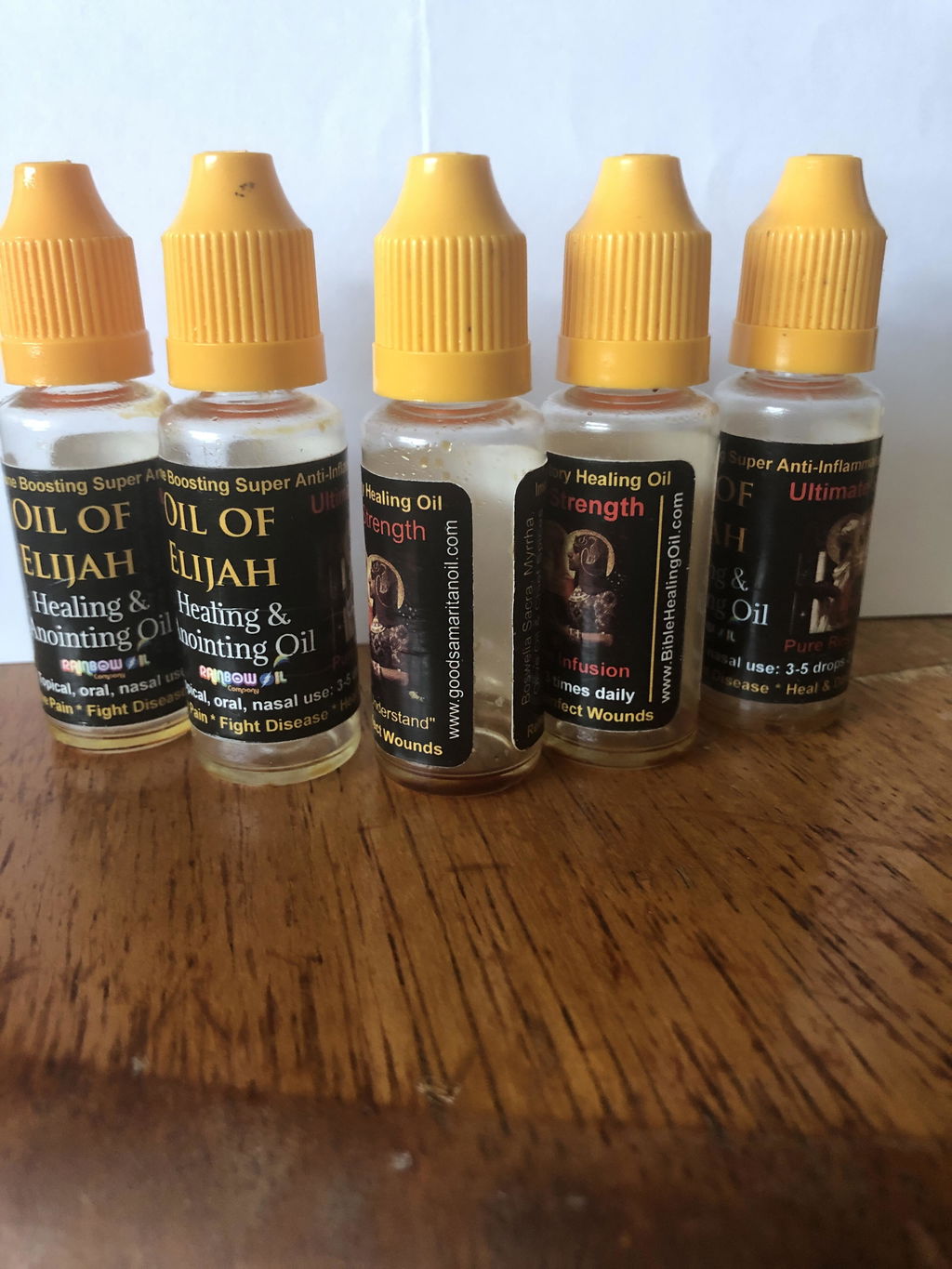
When used together — as they have been for thousands of years — the terpene profiles of frankincense and myrrh create a broader spectrum of bioactive compounds than either resin alone. This is the principle behind our Kure-It Bible Healing Oils, where the aromatic smoke from both resins is captured and infused into olive oil, following a traditional process designed to carry the resins' aromatic compounds into the carrier oil.
Why the Carrier Oil Matters
The choice of olive oil as a carrier is rooted in tradition. The 2023 clinical trial on frankincense extract for knee osteoarthritis specifically used an oily topical solution, suggesting that the carrier oil format may play a role in delivering resin-derived compounds. Our smoke-infusion method follows a traditional approach designed to carry the aromatic compounds of the resins into the carrier oil. Because extraction methods can significantly change which compounds end up in the finished product, product-specific lab testing is the best way to confirm the exact terpene profile of any given batch.
What the Research Does — and Doesn't — Tell Us
The scientific evidence for terpenes in frankincense and myrrh is growing rapidly, but it is important to be clear about what has been established:
- Frankincense and myrrh resins contain rich profiles of terpene compounds (monoterpenes, sesquiterpenes, diterpenes, and triterpenes).
- Boswellic acids from frankincense inhibit 5-LOX and other inflammatory enzymes in laboratory studies.
- Myrrh sesquiterpenes show concentration-dependent anti-inflammatory activity in vitro.
- α-Pinene from frankincense inhibits COX-2, a key pain and inflammation enzyme.
- A clinical trial supports topical frankincense extract for knee osteoarthritis.
> Wellness Disclaimer: The information in this article is for educational purposes and is not intended to diagnose, treat, cure, or prevent any disease. Kure-It Bible Healing Oils are not evaluated by the FDA. Individual results may vary. While scientific research supports the presence and biological activity of terpenes in frankincense and myrrh, most studies cited are preclinical (laboratory) or early-phase clinical research. Always consult a healthcare professional before using any new product, especially if you have a medical condition, are pregnant, or are taking medications.
Frequently Asked Questions
What makes Kure-It oils different from essential oils?
Unlike steam-distilled essential oils, which extract primarily the most volatile compounds, our process follows a traditional resin-smoke infusion approach. Because different extraction methods can yield different compound profiles, product-specific laboratory testing is the best way to confirm the exact terpene composition of any finished oil.
How do terpenes provide pain relief?
Research shows that specific terpene compounds from frankincense and myrrh resins have been studied for their interaction with inflammation-related pathways. α-Pinene has been shown to inhibit COX-2 in laboratory settings, boswellic acids have been shown to inhibit 5-LOX, and myrrh sesquiterpenes have been found to reduce inflammatory markers like nitric oxide in vitro. These are the same pathways targeted by common anti-inflammatory medications, though most studies cited are preclinical.
Are the terpene amounts the same in every batch?
No. Terpene composition varies based on the Boswellia or Commiphora species, harvest region, climate, storage conditions, and extraction or infusion method. This is natural for any plant-derived product and is why we source only the purest resins available.
Can I use Kure-It oils alongside other treatments?
Many of our customers incorporate Kure-It oils into their wellness routines. However, we recommend consulting with a healthcare professional before combining any topical product with other treatments, especially if you have a medical condition or are taking medications.
Experience the Power of Terpenes
Discover the difference that pure frankincense and myrrh resins, captured through our ancient smoke-infusion process, can make in your daily wellness routine.
👉 Shop Kure-It Bible Healing Oils
Sources & References
- Insights into frankincense and myrrh research — PMC/NIH (2024): https://pmc.ncbi.nlm.nih.gov/articles/PMC11481677/
- The Role of Myrrh Metabolites in Cancer, Inflammation, and Pain — PMC/NIH (2022): https://pmc.ncbi.nlm.nih.gov/articles/PMC9416713/
- Triterpenoids from Frankincense and Boswellia — Phytochemistry (2025): https://pubmed.ncbi.nlm.nih.gov/39401649/
- Fair Wild Frankincense & Myrrh Regulatory and Market Access Report (2026): https://static1.squarespace.com/static/5bec424b297114f64cb908d8/t/69eb329ab18f0b2827597b99/1777021594038/FairWild+Frankincense+&+Myrrh+Regulatory+and+Market+Access+Report_20260304.pdf
- α-Pinene, linalool, and 1-octanol: anti-inflammatory activities of frankincense — J. Ethnopharmacol: https://www.sciencedirect.com/science/article/abs/pii/S0378874115302907
- Chemistry and Biology of Essential Oils of Genus Boswellia — PMC/NIH (2013): https://pmc.ncbi.nlm.nih.gov/articles/PMC3606720/
- From bench to bedside, boswellic acids in anti-inflammatory therapy — Frontiers in Pharmacology (2025): https://www.frontiersin.org/journals/pharmacology/articles/10.3389/fphar.2025.1692443/full
- Topical frankincense extract for knee osteoarthritis: randomized clinical trial — PMC/NIH (2023): https://pmc.ncbi.nlm.nih.gov/articles/PMC9984289/
- Frankincense diterpenes as a bio-source for drug discovery — Expert Opin. Drug Discov. (2022): https://www.tandfonline.com/doi/full/10.1080/17460441.2022.2044782
- Chemical Composition of Commiphora myrrha Essential Oil — J. Agric. Food Chem. (2005): https://pubs.acs.org/doi/10.1021/jf051100x
- New Sesquiterpenoids from Commiphora myrrha and Anti-Inflammatory Activity — Molecules (2024): https://www.mdpi.com/1420-3049/29/18/4315
- Myrrhterpenes A and B, anti-inflammatory sesquiterpenes from Commiphora myrrha — Fitoterapia: https://www.sciencedirect.com/science/article/abs/pii/S1874390021001348
- The Genus Commiphora: Phytochemistry, Pharmacology — Pharmaceuticals (2024): https://www.mdpi.com/1424-8247/17/11/1524
- Commiphora myrrha gum resin: antimicrobial and wound healing — Scientific Reports (2025): https://www.nature.com/articles/s41598-025-17079-x
- Seeing the Unseen: Combination of Frankincense and Myrrh — PMC/NIH (2019): https://pmc.ncbi.nlm.nih.gov/articles/PMC6749531/